

Introduction
Strong corporate governance increasingly depends on how well an organisation manages data. In many companies, data is created across departments, stored in multiple systems, and used by different teams for reporting, analytics, compliance, and decision-making. When ownership is unclear, teams work with inconsistent definitions, duplicate datasets, and unreliable reports. Data stewardship frameworks address this problem by defining roles, responsibilities, and processes that ensure data is accurate, secure, and fit for business use. If you are exploring governance concepts through a data analytics course, stewardship is one of the most practical structures to understand because it converts “good data practices” into accountable day-to-day work.
What a Data Stewardship Framework Actually Does
A data stewardship framework is a structured approach that clarifies who is responsible for data at different stages of its lifecycle—creation, storage, transformation, usage, and retirement. The focus is not only on technology, but also on people and process. In simple terms, stewardship frameworks reduce confusion by answering key questions:
- Who defines a business term and its meaning?
- Who approves data access and ensures privacy rules are followed?
- Who checks data quality and resolves issues?
- Who decides which dataset is the “single source of truth”?
Without this clarity, data governance remains theoretical. With it, governance becomes measurable: fewer reconciliation issues, fewer reporting disputes, stronger compliance readiness, and higher trust in dashboards and KPIs.
Core Roles in Data Stewardship
Most organisations use a role-based model. Titles may differ, but responsibilities tend to map consistently.
Data Owner
The data owner is accountable for a data domain (for example, customer, finance, sales, HR). They are usually a senior business leader who can approve definitions, set priorities, and resolve conflicts between teams. Owners do not handle daily quality checks, but they provide authority and direction.
Data Steward
The data steward manages the operational side of governance. Stewards define data standards, document definitions, coordinate issue resolution, and ensure policies are applied consistently. They work closely with business users and technical teams. A steward is often the most visible governance role because they translate governance rules into practical workflows.
Data Custodian
Custodians handle technical controls. They manage databases, access permissions, backups, retention settings, and infrastructure policies. Custodians ensure that data is protected and available, but they typically do not define what the data means from a business perspective.
Data Consumer
Consumers are analysts, data scientists, and business users who rely on data for reporting and decisions. A good framework also defines consumer responsibilities, such as using certified datasets, following privacy rules, and reporting quality issues instead of creating unofficial copies.
These roles are central in modern governance discussions and are often covered in applied learning tracks like a data analyst course in Pune, where governance needs to connect directly to reporting reliability and business outcomes.
Responsibilities That Make Stewardship Real
A framework becomes effective when responsibilities are clearly tied to repeatable practices. Common responsibility areas include:
1) Data Definition and Metadata Management
Stewards and owners ensure that business terms are consistent. For example, “active customer” must mean the same thing across marketing and finance. Definitions should be stored in a shared business glossary and linked to datasets and reports. Good metadata management also includes lineage—tracking where a number comes from and how it was calculated.
2) Data Quality Management
Data quality is not a single metric. Stewardship frameworks often define quality dimensions such as accuracy, completeness, consistency, timeliness, and validity. Stewards monitor quality checks, track defects, and coordinate fixes. Owners decide acceptable thresholds and escalation rules when problems affect business reporting.
3) Access, Privacy, and Compliance Controls
Governance must enforce who can access data, under what conditions, and for what purpose. Custodians implement access controls and logging. Stewards help classify data (public, internal, confidential, sensitive) and ensure privacy requirements are reflected in workflows. This matters for regulations and internal audit readiness, even if the company is not operating in a heavily regulated industry.
4) Issue Management and Change Control
A stewardship framework should define how data issues are reported, triaged, assigned, and closed. It should also define change control—what happens when a metric definition changes, a column is renamed, or a pipeline is updated. Without change control, dashboards break and trust drops quickly.
If you are learning to build reliable reporting systems through a data analytics course, these responsibilities are the difference between a dashboard that looks correct and a dashboard that stakeholders actually trust.
How to Implement a Practical Stewardship Framework
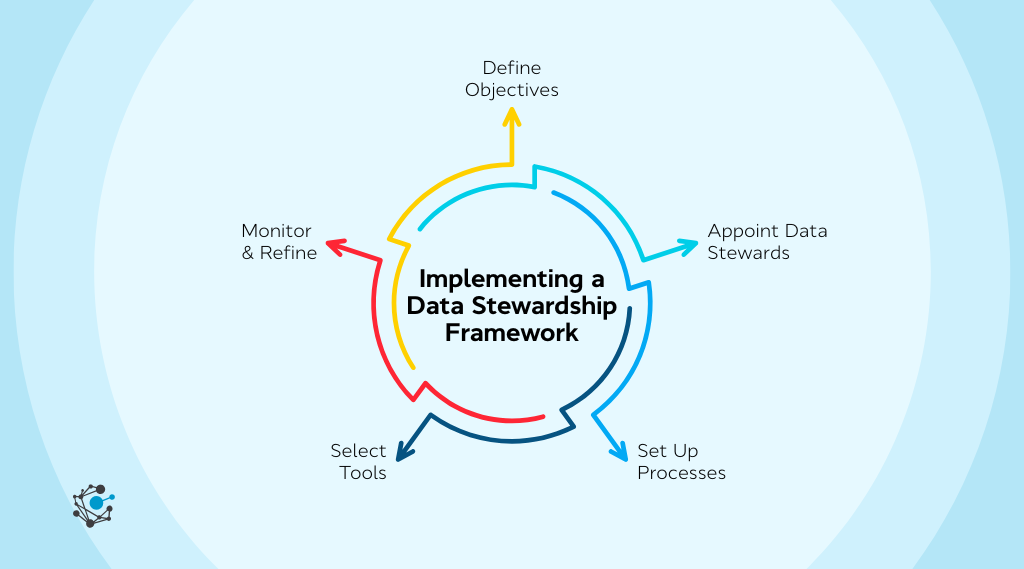
Implementation should be phased. Trying to govern everything at once usually fails.
- Start with priority domains: Choose one or two areas such as customer or revenue where inconsistencies cause real business pain.
- Define roles and escalation paths: Assign owners, stewards, and custodians with clear decision rights.
- Build a glossary and certification process: Mark datasets and metrics as “certified” once definitions and quality checks are agreed.
- Operationalise with simple workflows: Use ticketing for data issues, weekly quality reviews, and standard access request processes.
- Measure outcomes: Track reductions in reporting disputes, fewer duplicate datasets, faster audit responses, and improved data quality scores.
These steps align well with the practical governance exposure many learners expect from a data analyst course in Pune, especially when transitioning from pure reporting into enterprise analytics practices.
Conclusion
Data stewardship frameworks make corporate governance actionable by defining who does what, how decisions are made, and how data quality and compliance are maintained. By establishing roles like data owner, steward, custodian, and consumer—and linking them to concrete responsibilities—organisations reduce confusion and increase trust in analytics. Whether you are approaching governance from a reporting perspective or a broader enterprise data strategy, stewardship is a core structure that turns data into a reliable corporate asset. For professionals building these skills through a data analytics course, understanding stewardship frameworks provides a clear path from “data chaos” to accountable, scalable governance.
Contact Us:
Business Name: Elevate Data Analytics
Address: Office no 403, 4th floor, B-block, East Court Phoenix Market City, opposite GIGA SPACE IT PARK, Clover Park, Viman Nagar, Pune, Maharashtra 411014
Phone No.:095131 73277